

Written by Michelle Sok I HE, MSc in End of Life Studies
When I first planned my 20-day spring trip across the UK and Northern Europe, I expected good coffee and tea, grey skies, and the occasional rocky castle and cathedral. What I did not expect was to walk into a series of deeply human encounters with my lecturers and classmates that intersected with our studies in the End of Life Studies Programme at the University of Glasgow—each echoing the themes of life and death, and everything in-between.
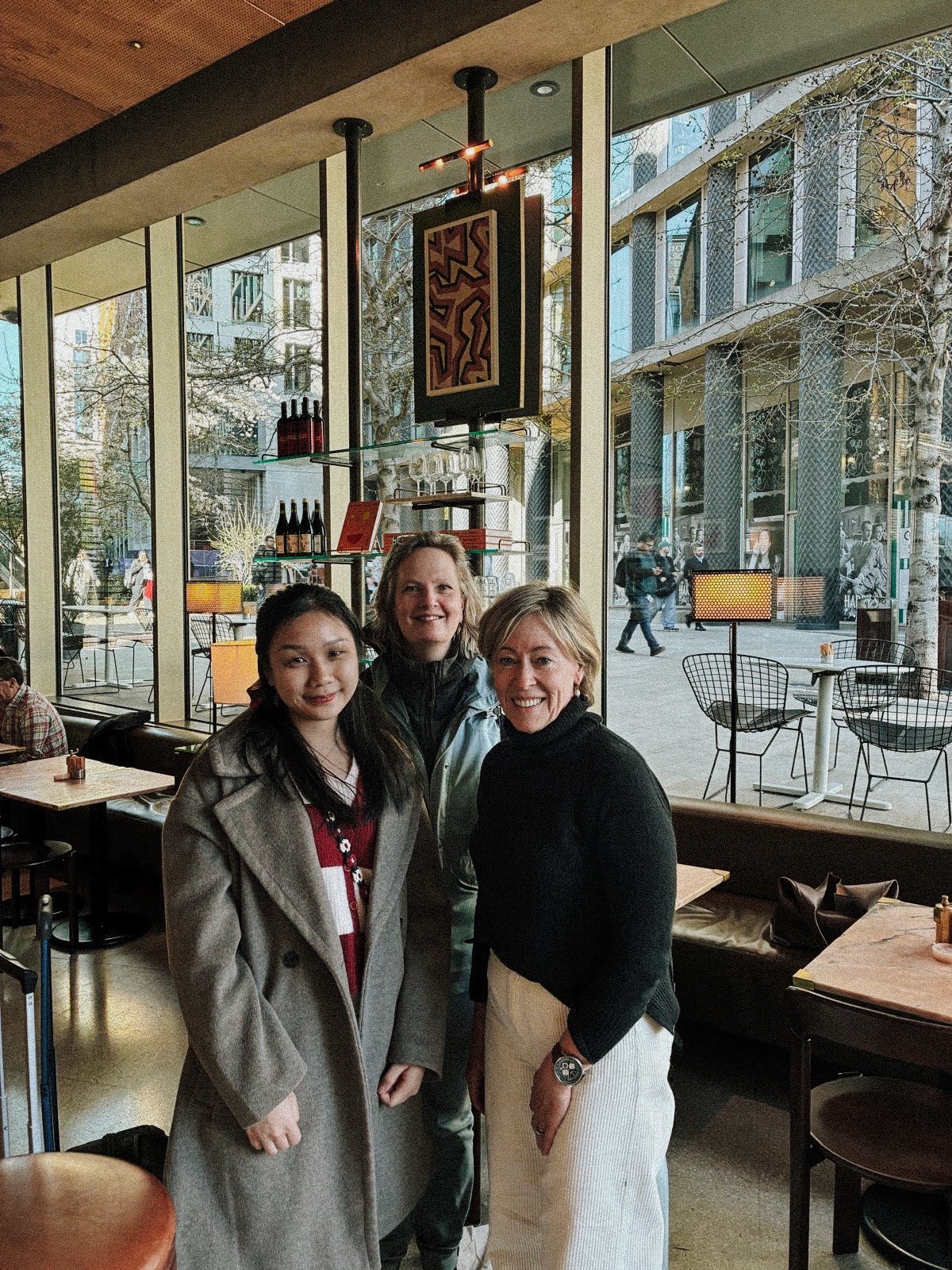
It all began when I arrived in London from Singapore on 1st April 2025, where I met fellow student Louise and Dr Marian Krawczyk, the End of Life Studies Programme convenor, for lunch. We shared stories and laughter in person for the first time—after months of seeing each other only in virtual weekly seminars. That meeting reminded me that distance learning can still foster real connections, and how shared values—especially in a field as tender and intimate as end-of-life studies—can bring people together in meaningful ways. I wished our conversation on life stories could have lasted longer, but soon it was time to head north to Glasgow!
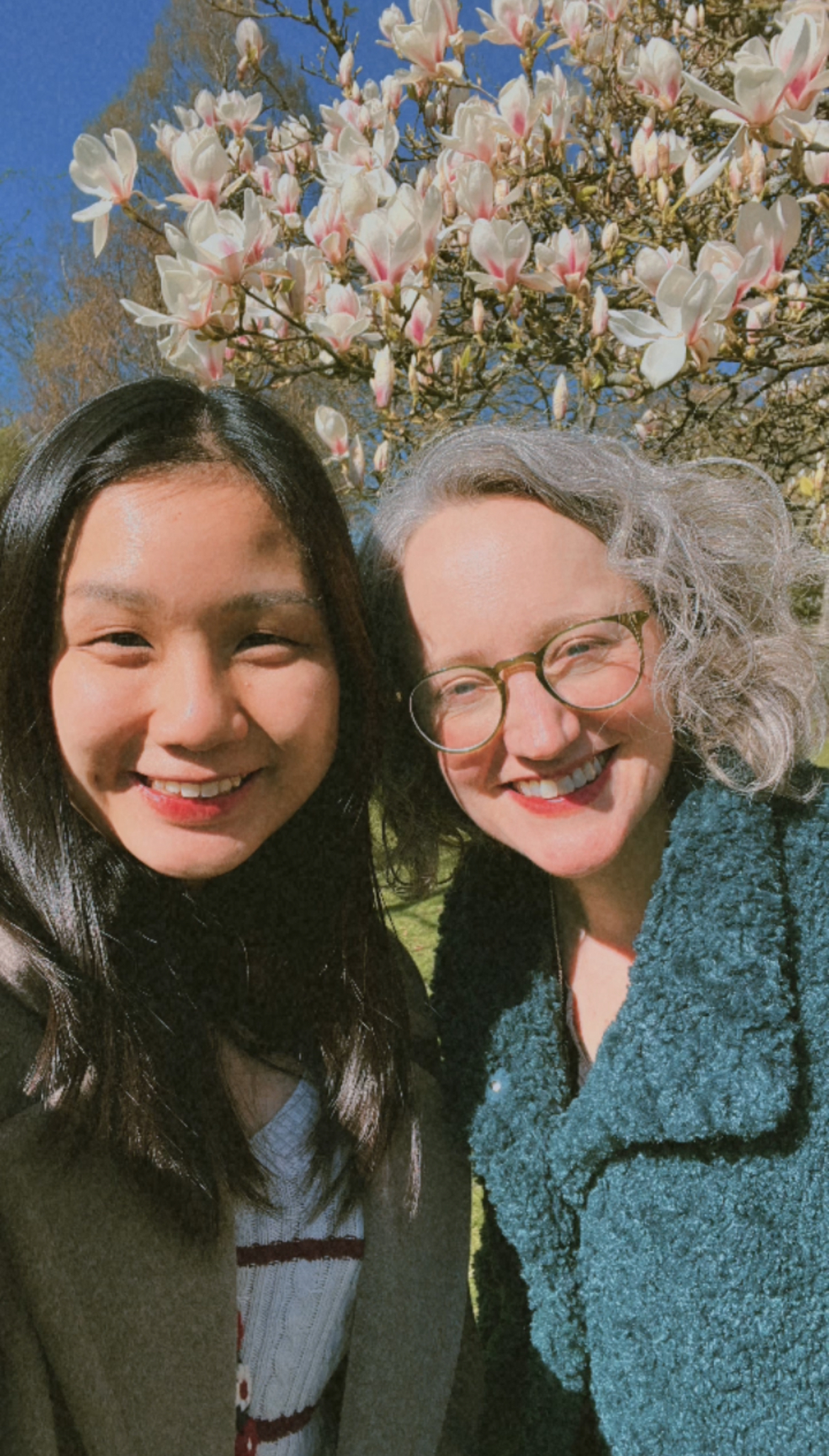
The next morning, I took a train to the Dumfries Campus of the University of Glasgow, where I met Dr Naomi Richards. Walking around the campus felt both grounding and surreal—I still remember Naomi telling me the histories of the buildings under the blue sky and blooming magnolia. One story stayed with me: how the site used to be a psychiatric hospital before becoming the current campus. Like the magnolia, one of the most ancient flowers that has survived and adapted across time, the Crichton Campus carries layers of memory and transformation. It reminded me of how, in our programme, we are always looking at how spaces, roles, and ideas about death and care continue to evolve—holding onto what came before, while slowly becoming something new.
Back in Glasgow, I took long walks through the city and the University, but the most striking visit was to the Necropolis, a 19th-century cemetery perched on a hill overlooking the cathedral. It felt like a natural culmination after visiting the St Mungo Museum of Religious Life and Art and the Friends of Royal Infirmary Museum nearby, where I had just seen exhibitions on how death and dying are represented in different religions. As I wandered its winding paths—passing joggers, infants in strollers, and groups picnicking—I thought about how we memorialise the dead in urban spaces—sometimes reverently, sometimes passively. The Necropolis felt alive with stories. I found myself searching for symbols on gravestones and reading the epitaphs that narrated fragments of lives once lived. It made me reflect on how the MSc programme has deepened my understanding of death—not just as an academic topic, but as something I now see in everyday landscapes. It reminded me of the idea that death is not hidden—it is often in plain sight; we have simply stopped noticing.
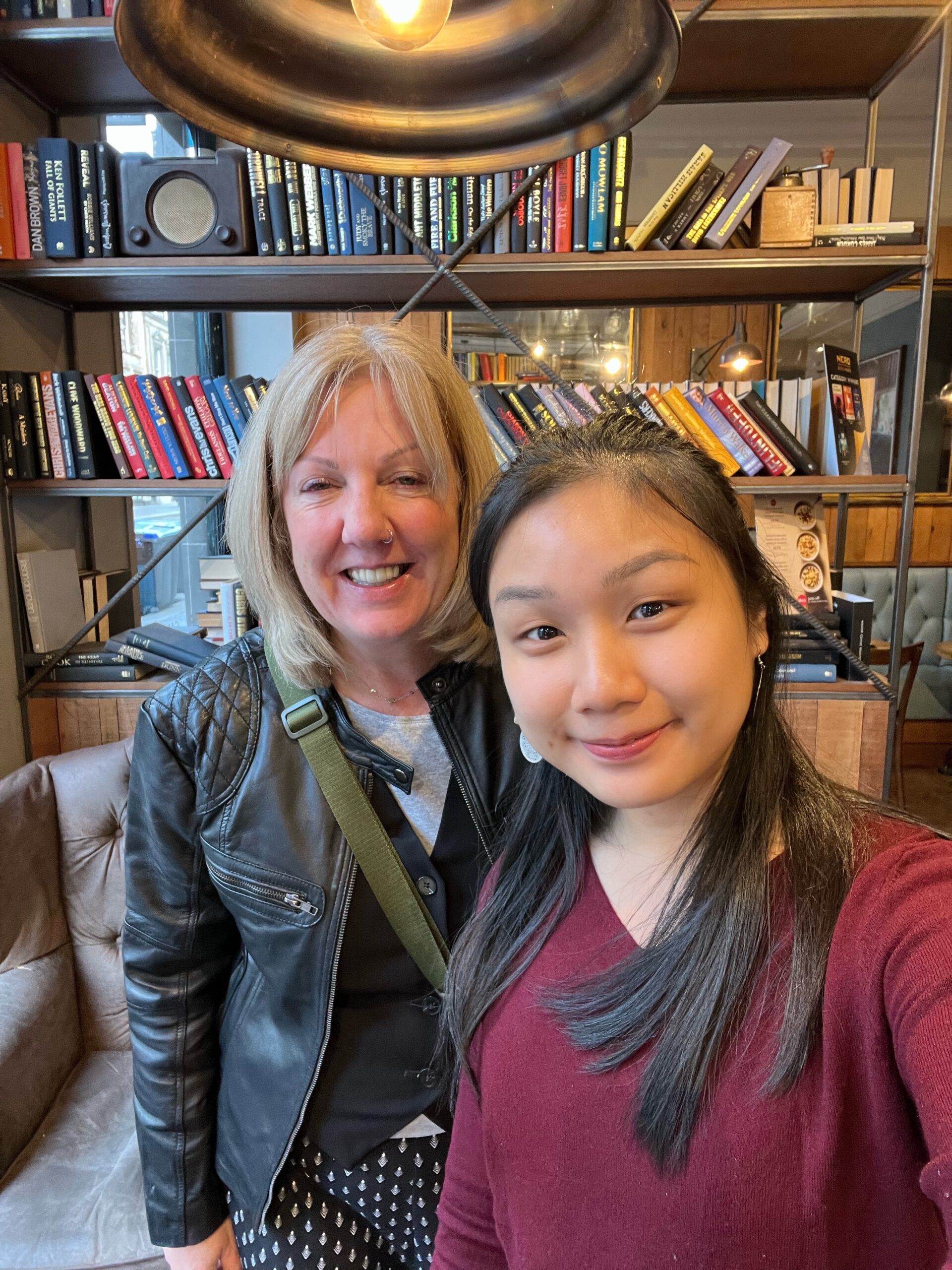
On 5th April 2025, before catching the train to Edinburgh, I met another classmate, Stella, for breakfast. Over hot chocolate on a chilly morning, we talked about her work as a funeral celebrant, and how the language of death has shifted over time. I really love how we are now narrating funerals as celebrations of lives, not just a mourning of death, echoing to the very title of “celebrant.” That shift is more than rhetorical—it’s cultural. It points to a changing relationship with death, one that seeks to acknowledge grief while also honouring joy, memory, love and legacy. Our conversation reminded me how end-of-life work often holds opposites—sorrow and humour, silence and story—at once.
From there, I flew to Copenhagen and joined Linda’s Death Café on 8th April 2025. Set in a cozy café with warm drinks and gentle conversation, it was one of the most intimate experiences of the trip. Strangers shared reflections on their experiences of loss, dying, and what it means to live fully—not just about good deaths, but also good lives. The Death Café was not about solving or fixing anything. It was simply about being present—together. It felt diverse and inclusive, with authentic feelings that received no judgement. In many ways, it embodied what we often discuss in class: how public engagement with death can shift the culture, one conversation at a time.
After Denmark, I made a short trip to Sweden, visiting Stockholm and Uppsala. The highlight was seeing the royal burial mounds in Uppsala , ancient sites rich with symbolism and ritual. Even in those historic spaces, I found resonance with our course themes: the relationship between death and identity; how societies remember their dead; and how grief is shaped by time and culture.
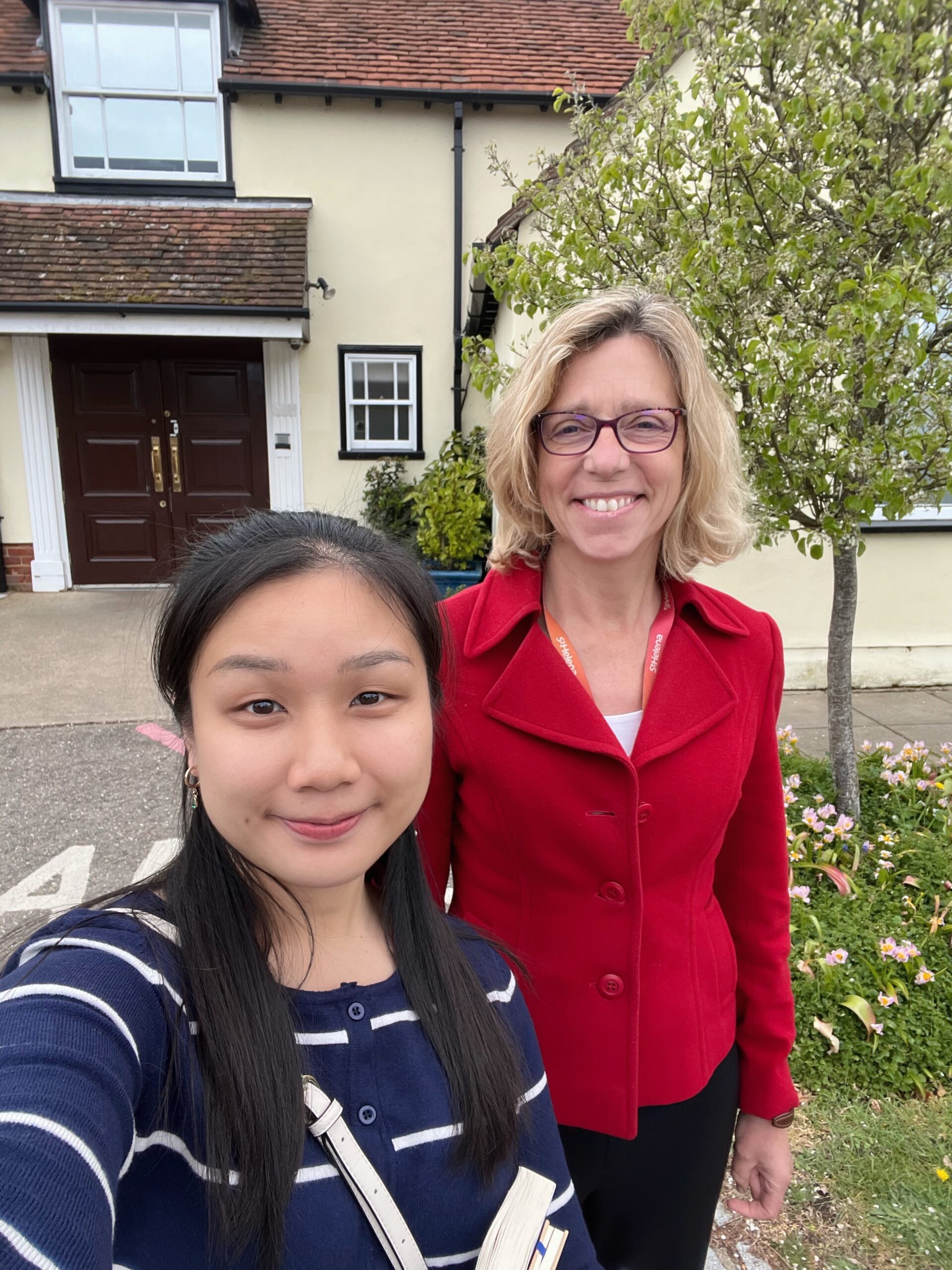
On 14th April 2025, I arrived in Colchester, UK to visit Karen, another classmate. She welcomed me into her home, and we spoke at length about the hospice system and palliative care in the UK. The next day, I had the privilege of doing clinical shadowing at St Helena Hospice, where Karen works. It was my first time in a UK hospice setting, and I was struck by the warmth of the staff, the attentiveness to each patient’s needs, and the emphasis on holistic care. I could see how every staff member brought their own strengths and compassion to the work—caring not just for the patients, but for their days, their dignity, and their personhood. Here, the theories and principles from our coursework came to life—embodied by people doing the quiet, everyday work of compassionate care.
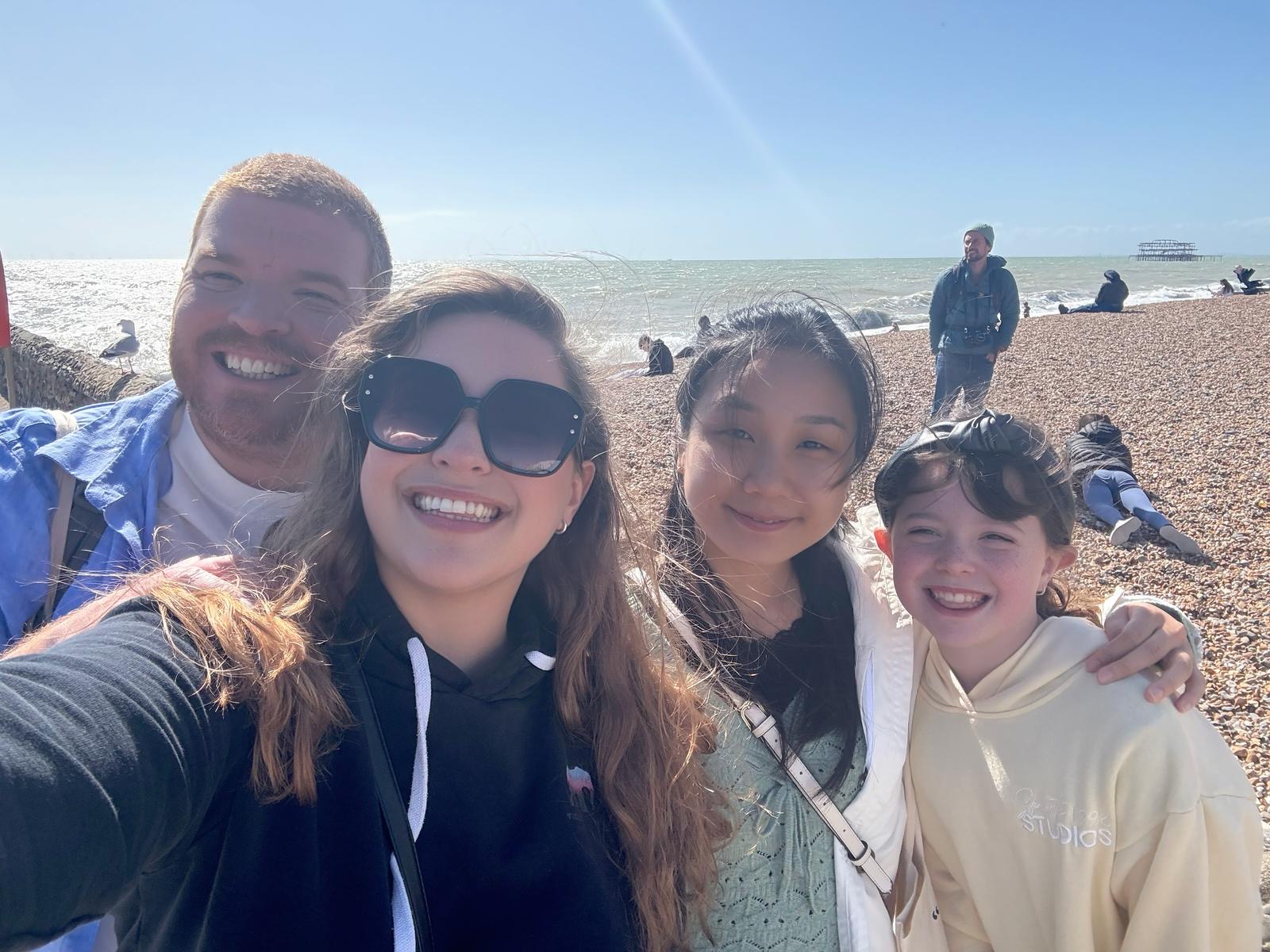
The final stop on my journey was Brighton, UK on 16th April 2025, where I spent time with Christina, another classmate, her daughter and her fiancé. We walked along the seafront and talked about how death is all around us, not in a morbid or dramatic way, but simply as a part of life that most of us do not notice. Death is everywhere in the community—we just need a pair of eyes to see it.
Looking back, this trip offered me more than a series of train rides and destinations—it offered a living curriculum. It brought the theories, debates, and frameworks of our MSc programme into everyday encounters: a cemetery in Glasgow; a café in Copenhagen; a hospice in Colchester; a lunch table in London. Everything has felt more alive since then. It reminded me that end-of-life studies is not just academic—it is relational, embodied, lived.
It is about listening and witnessing, walking alongside narratives, and noticing what often goes unnoticed. Sometimes, the most profound learning does not come from lectures or books, but from curious minds, open doors, shared meals, quiet walks, and soft conversations.
And in a way, isn’t that what end-of-life work is all about?

Wonderful insights on your journey! Thank you for sharing not just the engagement with the course but the students and professors; which was always my favourite part!