

As the University of Glasgow prepares to close for the winter break, I find myself reflecting on a significant personal milestone: the first Christmas without my mother. She lived a full, truly remarkable, and stubbornly independent life, dying just shy of her 97th birthday earlier this year. After her death, I returned to my teaching and research almost immediately, but I did not want everything to just go back to what passes as ‘normal’ these days.
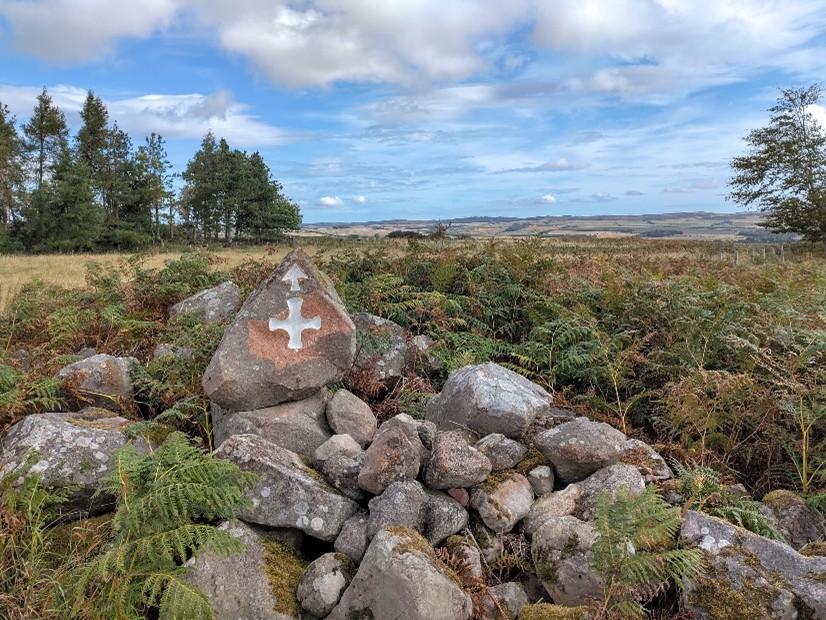
In my field of End of Life Studies, we often discuss the theory of ‘continuing bonds’, which is the idea that grief is not a process of getting over a loss, but of renegotiating a relationship with the deceased. Keeping the influence of those we have lost as an active part of our lives can help us feel more connected to our own history and maintain a sense of continuity with the person who has died as we navigate our grief. To create the space for this renegotiation, I made the somewhat rash decision to undertake a solo, multi-day pilgrimage along St. Cuthbert’s Way.
The Geography of Grief
The word pilgrim derives from the Latin peregrinus, meaning a foreigner or stranger who exists per-agri, which literally means ‘beyond the field’ or outside their own country. This etymology captures the essence of grief as a strange land, where we navigate a world made unfamiliar by loss, wandering as a resident alien until a new sense of place can be found.
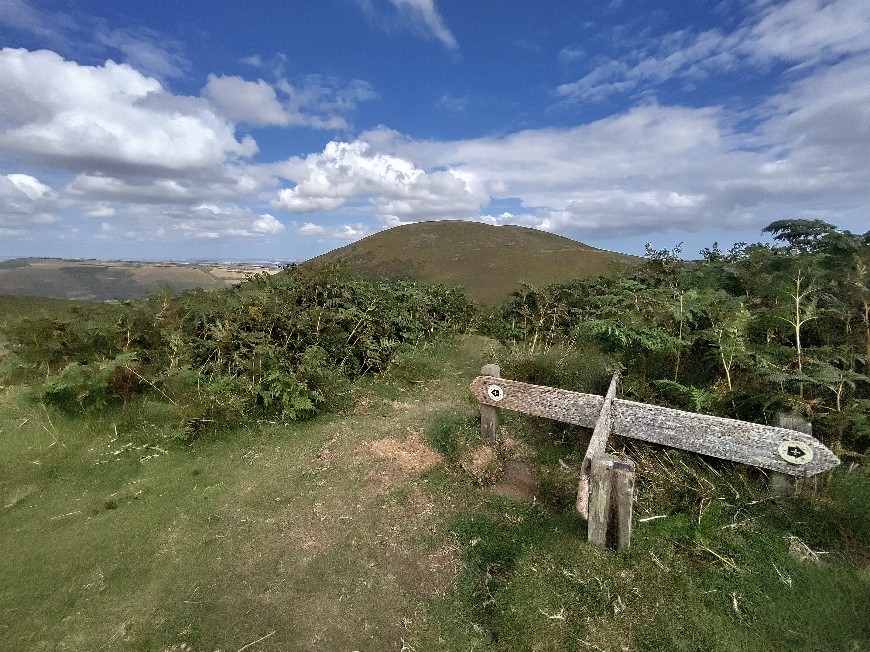
It was this desire to navigate that unfamiliar land that led me to the historical structure of a pilgrimage. Though I am an atheist, this form of a journey appealed to me. I wanted a secular walk of remembrance as a physical manifestation of an internal transition. There was something grounding about walking a route where others had reflected on their own lives for centuries; it made my intensely personal experience feel part of a broader, collective human history.
Once on the path I found that distance walking was a form of slowing down my brain until it matched the rhythm of the rest of my body. Although I intentionally spent time each day thinking about my mother, there was also a profound relief in letting my grief exist as a felt sensation, bypassing the need for conscious articulation or fumbling for the ‘right’ words that social interaction often requires.
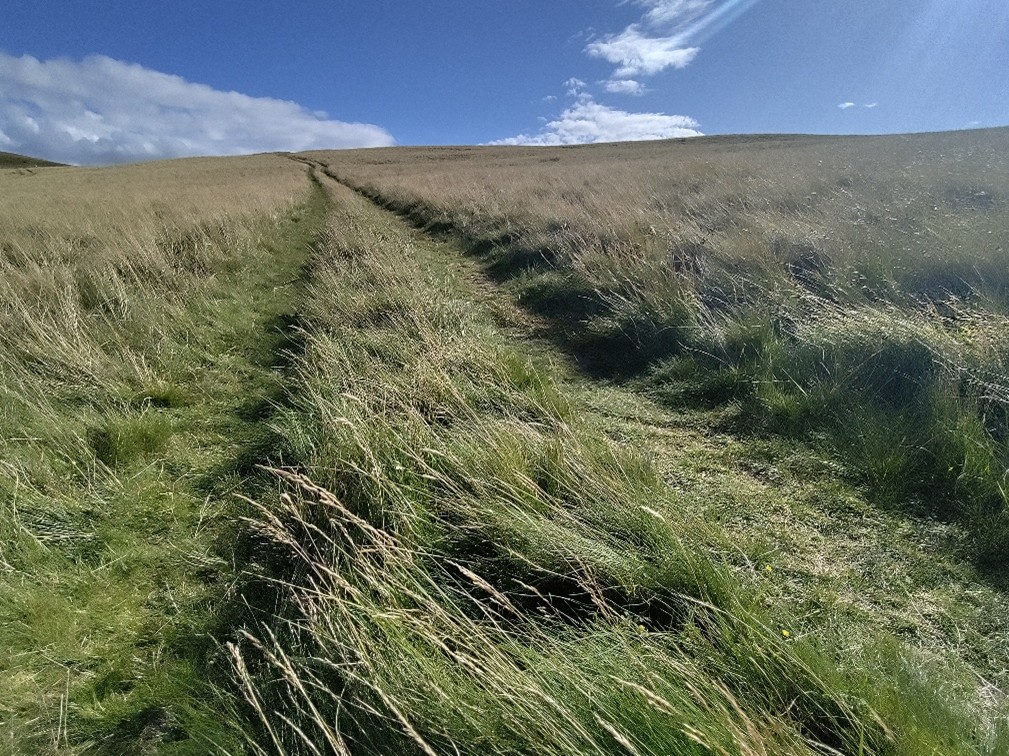
This rhythm carried me across St. Cuthbert’s Way, which spans roughly 100 km from Melrose in the Scottish Borders to Lindisfarne (Holy Island) in Northumberland. With a few detours, my journey totaled 125 km over six days. On most days, I encountered only a handful of people.
Of ‘Killer Cows’ and Ancient Caves
The landscape offered its own practical challenges. I frequently had to negotiate fields of cattle, which sounds trivial until you consider the statistics regarding injuries and deaths caused by them each year. Facing down these ‘killer cows’ became a private exercise in bravery, a way of proving I could navigate a world that felt suddenly more precarious without the maternal anchor I have known my entire life. Despite my anticipatory anxiety, the local cattle remained stubbornly uninterested in my presence.
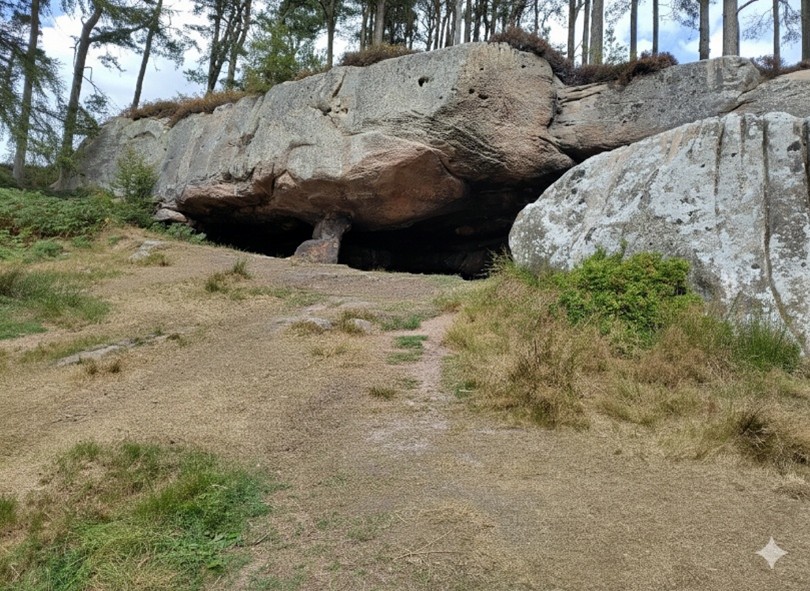
One significant moment occurred at St. Cuthbert’s Cave. According to apocryphal history, this is where the monks of Lindisfarne rested while carrying St. Cuthbert’s body away from the coast to protect it from Viking raids in the 700s. Standing under stone shelter as a storm threatened, the analogy was stark. I was carrying my mother with me, not as a physical weight, but as a composite of her memory, her continuing influence, and the new responsibility of being a keeper of her story.
The Singing Seals and the Holy Isle
The journey culminated in the crossing to Holy Island. The traditional pilgrimage route involves walking across the wet sands at low tide, barefoot, following the long line of ‘pilgrim poles’ that mark the path. As I approached the Island, I was serenaded by grey seals from the distant sandbars. Their haunting, melodic wails sounded like something from Norse mythology, forming a chorus that connected the living with the dead.
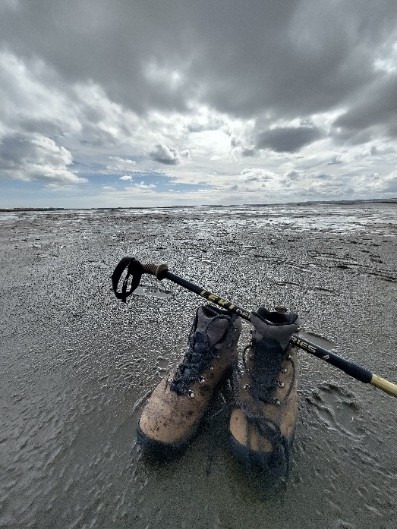
St. Cuthbert sought a connection to the divine through nature and solitude. While I do not share his theology, I recognize the transcendent quality of the natural world. In the rhythm of the tides and the vastness of the Northumbrian sky, the finality of my mother’s death felt less like an ending and more like a return to the elemental origins from which we all spring and must once again return. The landscape became an additional medium through which our continuing bond will evolve, widening from her individual presence to encompass the earth itself.
A Year-End Reflection
In reflecting on the ending of 2025, I am struck anew by the privilege of my pilgrimage. We often treat grief as something to be ‘managed’ alongside our professional and daily responsibilities, but grief requires its own geography and its own pace.
My pilgrimage provided time and space to be with my dead, not as idealized or romanticized figures, but in the fullness of who they actually were. To sit with that reality, complexity and all, felt like a true honouring of my mother and a vital way to ensure our relationship continues, even as her life has ended.
As you head into the winter break, and the dawning of the new year, may you – if you wish – find your own version of a pilgrimage: an opportunity to slow down and be with the presence of your dead, whose lives have shaped your own and whose stories continue to unfold within yours.
You can find out more about Betty Shiver Krawczyk here.
_______________________________________________________