

The recent invasion of the National Guard into Washington DC has been unsettling to many across the US and the world. One of the reasons the current Trump administration has given as to the need for the national guard to be in the capitol is homelessness. Trump has ordered unhoused residents out of Washington DC with threats of arrest and moving people to what seem to equate to internment camps on the outskirts of town.
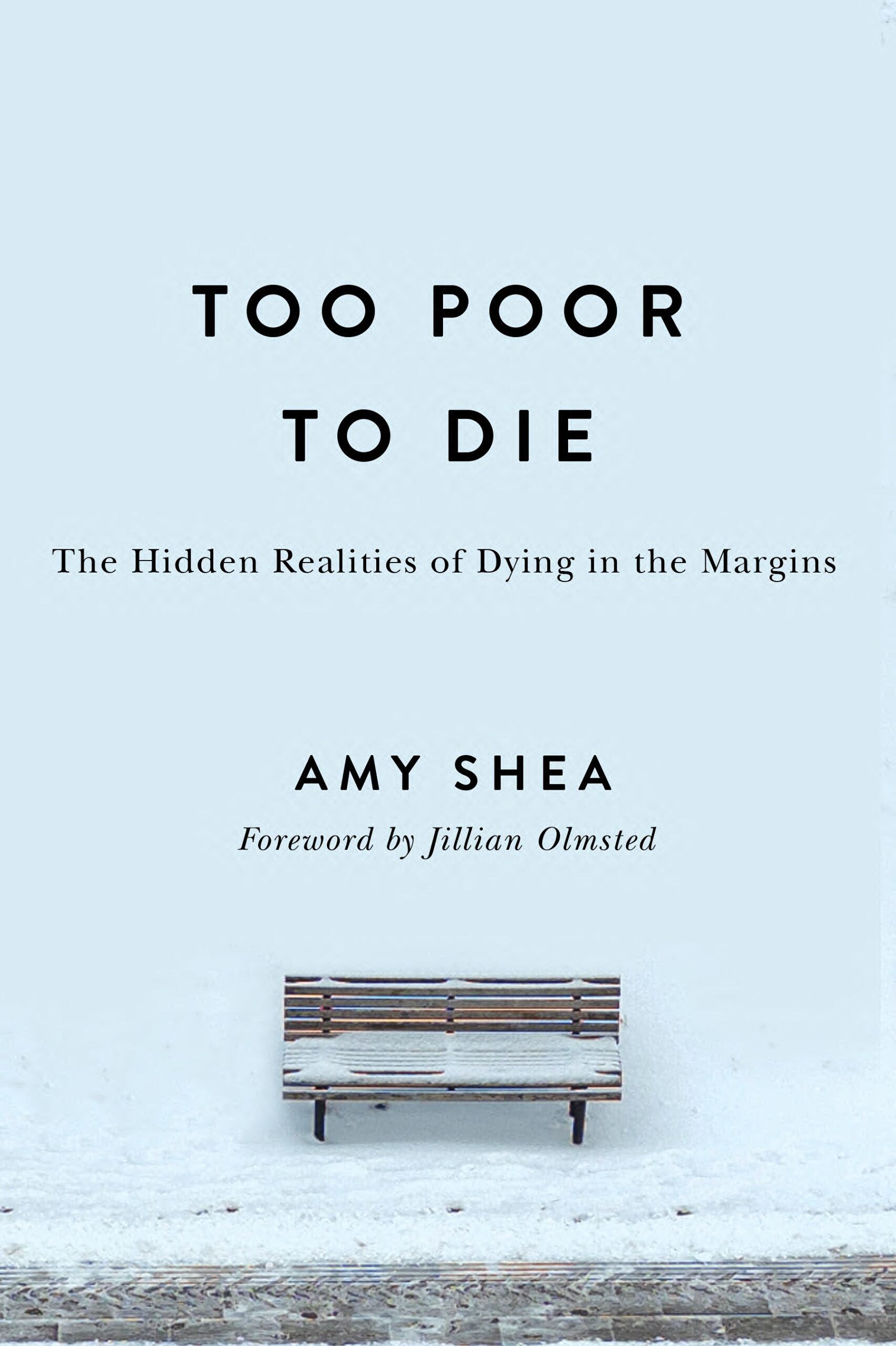
This has been really disheartening for me to witness, especially in light of the research and writing I have done into the disparities and inequities faced by unhoused people and the detriment this has on their health outcomes, including dying at much earlier ages than their housed counterparts. As I write about in my new book, Too Poor to Die: The Hidden Realities of Dying in the Margins, encampment sweeps are traumatizing and detrimental to people experiencing homelessness. One reason is the chance of losing important items such as birth certificates, identification, medications, and items of sentimental value, as described below in an excerpt from the book:
“Although encampments are not up to public health standards, that doesn’t necessarily mean it’s safer for people to be moved out of them. The consequences of being moved on without being placed in housing are also very serious. Numerous studies and organizations have shown that each time someone is moved from an encampment, they run the risk of losing so much: personal property medications identification shoes, medical and legal documents, blankets, tents, family photos…any sense of stability and safety. These are things that hold meaning—tools to survive, small comforts, all being expeditiously gathered. People take what they can before the highway crews come through to clear out the area, what the campers in California refer to as the “Caltrans shuffle”
One of the things I explore in the first chapter of Too Poor to Die is where people are allowed to physically exist and how this has a huge effect on quality of life, including access to public transport, health care, education, commerce, and other elements of society that people need to thrive. Vagrancy laws force people into the shadows, struggling to survive. Without affordable housing options, homeless encampments can be a much more accessible and safer place to reside than the shelter system, which can be fraught with restrictive rules, violence, excessive noise, and disease. As I write in regards to encampments, “Public health concerns exist and need to be taken into consideration, but that means public health for everyone.” Not just those that can afford it.
The backward move toward criminalizing homelessness isn’t coming out of nowhere. There has been a visible shift in laws and attitudes towards homelessness in the US over the last few years. The legality of camping for homeless individuals has recently shifted once again, with the Supreme Court ruling in City of Grants Pass v. Johnson (2024) that cities can enforce bans on public camping, even if shelters are full. This decision reversed the earlier Ninth Circuit ruling in Martin v. City of Boise (2019), which had prohibited such bans. We see this playing out around the country, especially in the Bay Area of California, where homelessness is a significant issue, there have been increased sweeps of encampments. This is when people are forced to move from tents, camper vans, or other makeshift shelters. When this happens, they have to take what they can before the city sends in waste management teams to bulldoze and trash any remaining items. Earlier this year, in 2025, the City of San Jose swept an encampment that had a garden being maintained, despite a petition that had been signed by city residents.
Cities cite blight and public health issues, but when a community has created a garden to help sustain themselves, shouldn’t we take pause? Not only should we recognize this as a community that is sustaining itself, rather than see it as a trash heap, we should also stop to consider the high cost of living that forces people to live in tents and grow or scavenge for food in one of the richest nations in the world.
Moving people on from encampments doesn’t solve any problems beyond hiding it from those who would prefer to look away. Cities will claim that they offer housing and services to people who want to take them, but they’re not always offered in a timely fashion or in a way that’s truly accessible. So, yes, some people may move into some temporary housing situation, but those who won’t or can’t for a myriad of reasons, will simply have to find somewhere else to bed down. This might be somewhere else in the same city or in a neighboring one, where they’ll stay until they are once again forced to move. Each disruption potentially creating further barriers to finding more sustainable housing options. The sparse social support given to our unhoused community members is getting even sparser in the wake of our current political climate. This is why I feel it’s even more crucial to get the word out, to raise awareness.
I’m full of gratitude for the space that the University of Glasgow gave me to work on this project and to see it come to fruition as a published book. Please join me in this journey to better understand what it’s like living and dying in the margins. Follow me on Instagram @amyshea_author and sign up for my mailing list on my website! I hope to see some of you at one of my upcoming events (both online and in person)! For those in the UK, I plan to host local events in 2026, so stay tuned. In the meantime, as a community, let’s show up for those who are unhoused by donating and volunteering to local shelters, spreading the word on how folks can get involved and help, and showing grace to our fellow humans.