

Unlike many academics and practitioners in the field, I didn’t come to death and dying through a memorable personal experience or a familial connection to the industry. I came to it by happenstance. I am a trained scholar in the sociology of gender, work, and organizations who was primarily interested in women’s experiences working in nontraditional fields. “Funeral Divas” (a social and support network for women in the industry) was all the rage in 2013, when I was having conversations about PhD topics. I became interested in the feminization of funeral directing, what Reskin and Roos (1990) describe as the movement of women into formerly male-dominated occupations. This interest ultimately set the stage for my research agenda as my early work examined gender beliefs and gendered pathways into funeral work.
As my research continued, I started teaching my own death and dying course in the Department of Sociology and Political Science at Jacksonville State University in the USA during COVID-19. A graduate colleague introduced me to end-of-life doulas, and given my research background, it fit perfectly.
I dove headfirst into end-of-life doula scholarship. Two articles in particular, Francis (2022) and Koksvik (2020), shaped my perspective on doulas as an emerging role in deathcare at the intersection of neoliberalism, professionalization, and feminized care work. As I became familiar with the literature, a pattern emerged. Recent reviews of end-of-life doula literature (Rawlings et al. 2019; Yoong et al. 2022; Thompson & Utz 2024; Prendergast et al. 2025) consistently identify similar themes: doulas fill gaps in end-of-life care, they navigate role ambiguity, most research is situated in the global north, and studies draw on demographically similar samples (White, middle-class women). The reviews also document ongoing tensions around integration, regulation, autonomy, and compensation.
These observations led me to propose the edited volume End-of-Life Doulas and the Transformation of Deathcare (a tentative title), which I’m coediting with Dr. Amy Dellinger Page, a sociologist at Appalachian State University in the USA. The volume, expected from Bloomsbury in 2028, aims to build on this literature. The project also led to a sabbatical, a visiting scholar appointment, a happy return to Scotland, and ultimately this blog post.
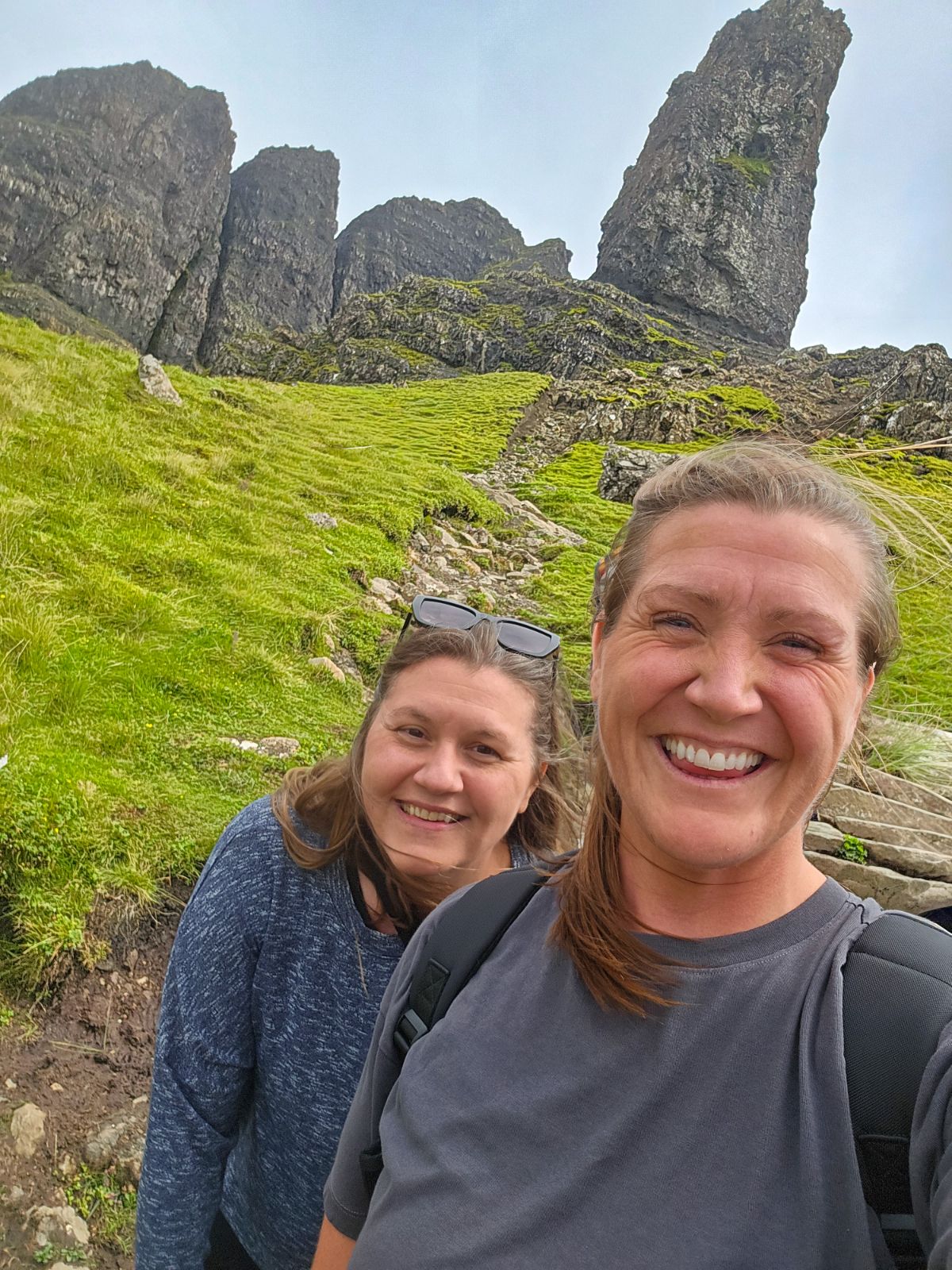
I had first visited the Highlands and the Isle of Skye in the summer of 2025, not because of Outlander (like many tourists) but inspired by my love of the video game Assassin’s Creed Valhalla (like only the coolest tourists). As I was planning my sabbatical, the University of Glasgow’s End of Life Studies Group was the obvious choice. I had met Dr. Marian Krawczyk through the End-of-Life Doula International Research Group, and when I reached out about the possibility, she was kind enough to arrange a visiting scholar appointment for fall 2026. Luckily, this time I was also able to share Scotland with my family, including returning to the Isle of Skye with my sister.
Two events lined up serendipitously with my appointment: an End of Life Studies book club reading Lyn Lofland’s The Craft of Dying, and a four-part webinar on end-of-life doulas’ relationship to the history of care work, cosponsored by the Collective for Radical Death Studies (CRDS) and the National End-of-Life Doula Alliance (NEDA). The webinar speakers included Dr. Ara Francis, a fellow sociologist who was also Lofland’s student.
I began attending the webinar series and immersing myself in The Craft of Dying, and I felt like a graduate student again. The book reminded me of an article I had read two years earlier by Dr. Gitte Koksvik. When I mentioned the connection to Dr. Krawczyk, it turned out Dr. Koksvik was a former postdoctoral researcher at the Glasgow End of Life Studies Group.
There was a clear throughline. Lofland was one of the first to discuss the happy death movement and its emphasis on expressivity; Koksvik later located the critique of death positivity in individual responsibilization; and the CRDS/NEDA series extended this discussion to end-of-life doulas, situating their work within the racialized and gendered history of care work. This throughline connects to a question my coeditor and I continue to grapple with as we work on this edited volume: Will the end-of-life doula movement contribute to meaningful social change, or will it reproduce the very system it seeks to transform?
As part of my appointment, I was invited to give the first Solway Seminar of the 2026–27 season, “Developing International Connections within and between End-of-Life Doula Communities,” where, in keeping with the series theme, I spoke about research as community building. This book is our attempt at exactly that: community building. The volume brings together academic and practitioner voices, includes diverse and intersectional experiences, and expands scholarly representation of end-of-life doula movements beyond the global north to South America and Asia. Our 30-plus contributors span academia, end-of-life doula organizations, community care organizations, and advocacy groups worldwide. We hope this book can be a useful resource for practitioners and scholars and a starting point for critical conversations about this emerging field.
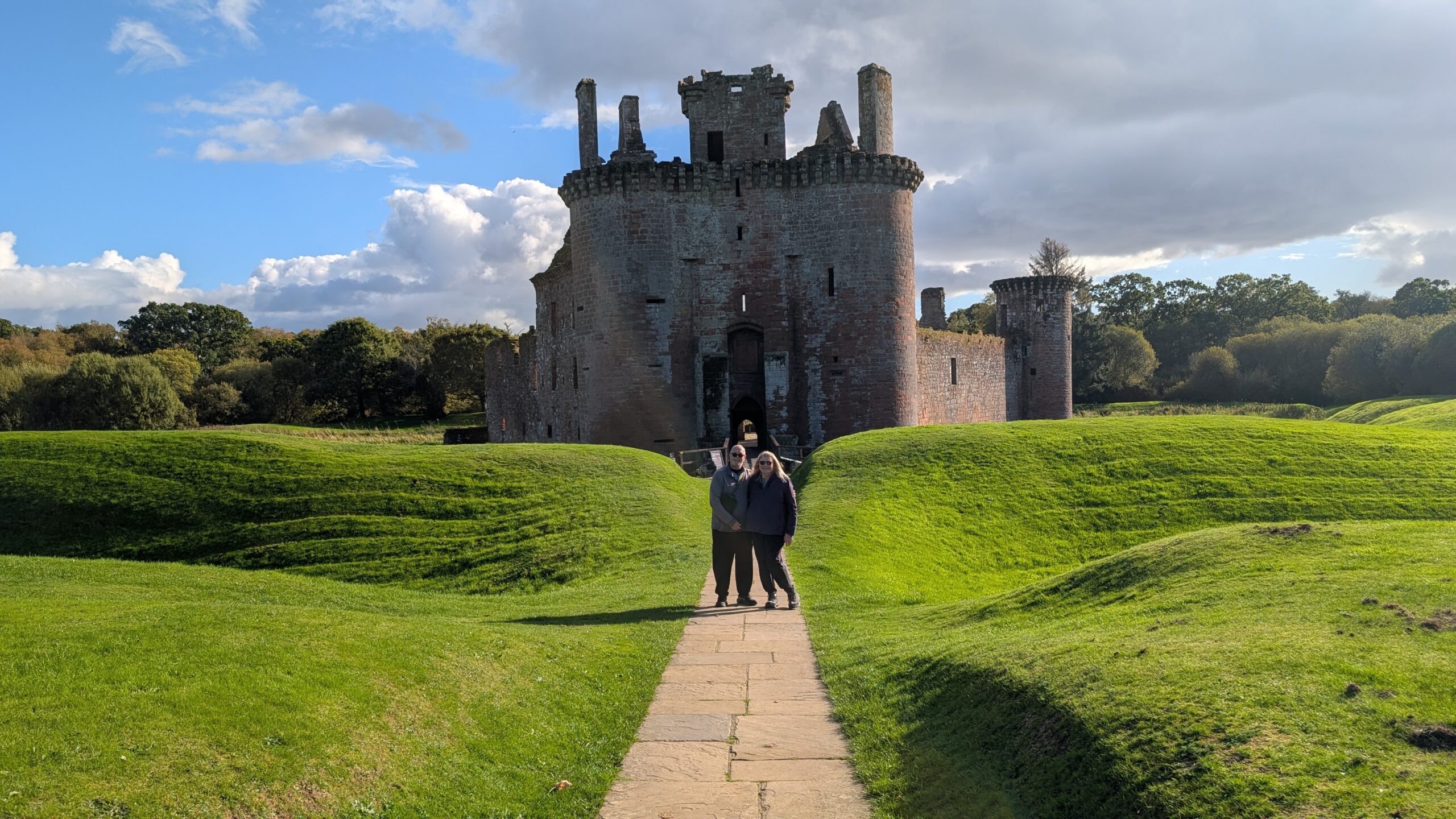
My sabbatical in Dumfries felt like a scholarly homecoming and, as I welcomed my sister, my partner (Brad), and my parents to Scotland, a personal one too. Across their visits we explored Dumfries and Galloway, the Highlands, Edinburgh, and North West England. A meaningful stop was Stirling Castle, which my maternal grandmother also visited in the 1990s because of our family’s Clan Buchanan roots in the area.
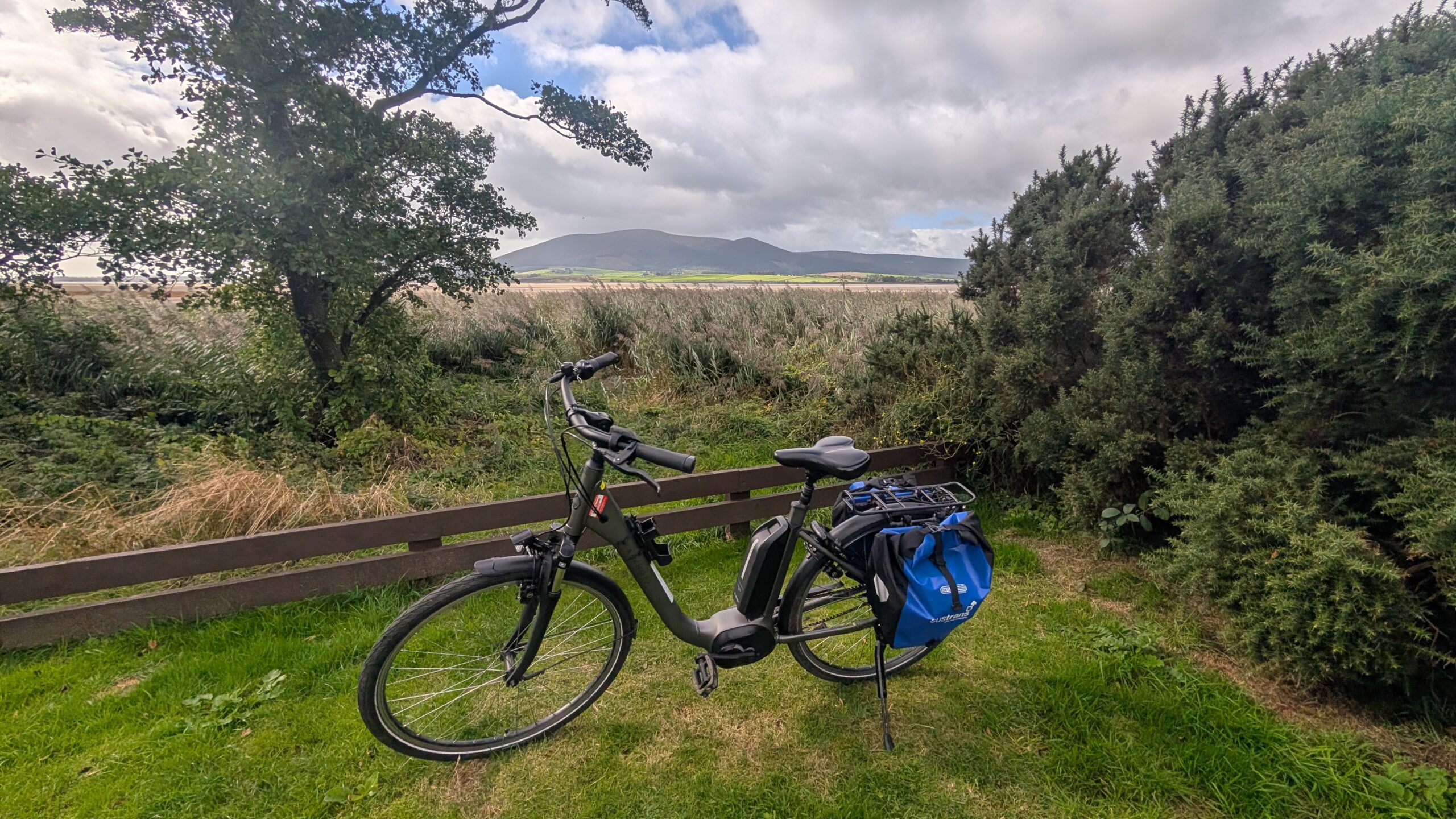
A major highlight of my stay was an e-bike loan provided (for free!) by the Walk Wheel Cycle Trust of Dumfries. Biking is a hobby I picked up to survive graduate school, and it was a delight to ride through the Scottish countryside and along the Solway Firth. On a longer weekend ride, I discovered the Kirkpatrick Macmillan Loop, named for a blacksmith from the area who is credited with inventing the pedal bicycle. The hobby that carried me through graduate school, it turned out, was invented just down the road from Dumfries.
The professional and personal growth that happened in the span of five weeks, in a country that I love, is impossible to convey. I remain eternally grateful to Dr. Marian Krawczyk and the End of Life Studies Group for this opportunity, for welcoming me into their community, and for supporting my growth as a scholar.
Biography
Dr. Sarah Donley is Professor of Sociology at Jacksonville State University in Alabama, USA, and in fall 2026 she was a Visiting Scholar with the End of Life Studies Group at the University of Glasgow. Her research focuses on gender, work, and organizations, including the feminization of funeral directing and the emergence of end-of-life doulas. She is coediting End-of-Life Doulas and the Transformation of Deathcare (Bloomsbury, expected 2028) with Dr. Amy Dellinger Page of Appalachian State University in North Carolina, USA.